Prayer times in Sheffield, South Yorkshire: prayer starts and mosque times are not interchangeable
Don’t mix prayer beginnings with mosque jamaat times. Learn how to check today’s Fajr, Dhuhr, Asr, Maghrib and Isha for Sheffield, and confirm congregation schedules directly.
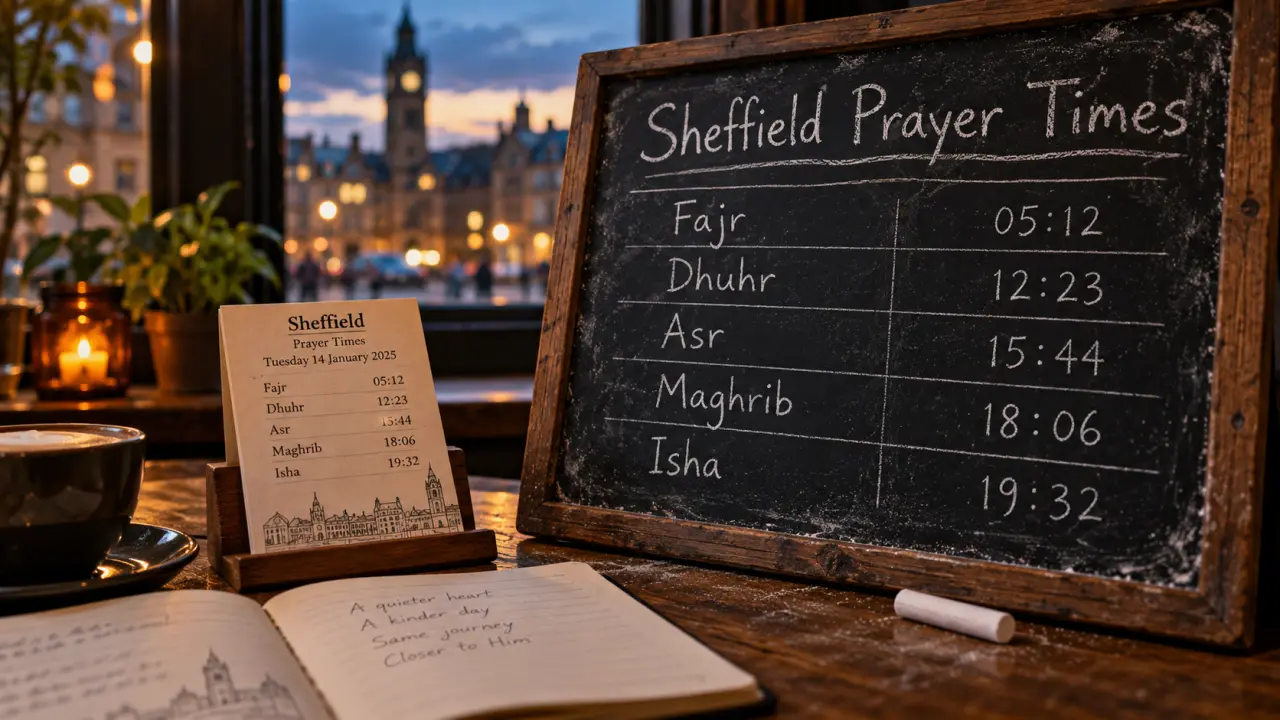
For today’s Fajr, Dhuhr, Asr, Maghrib and Isha times in Sheffield, check a dated Sheffield timetable, then confirm the congregation time with the mosque you plan to attend. This page does not display a live timetable: an undated set of times would not reliably answer when to pray today.
Finding today’s Sheffield prayer times
Islamic Relief UK provides a Sheffield prayer timetable and explains the distinction between prayer beginnings and mosque congregation times. Before using a timetable, check that its location is Sheffield, South Yorkshire, and that the displayed date matches the day you need.
For a monthly or yearly calendar, keep the provider’s calculation information alongside the saved copy. A screenshot showing only times loses important details about its date, location and settings.
- Check all five prayer labels: Fajr, Dhuhr, Asr, Maghrib and Isha.
- Keep the sunrise entry visible rather than confusing it with Fajr.
- Confirm that the timetable uses local time and accounts for daylight-saving changes.
- For a mosque visit, check its own current timetable as well.
Why Sheffield prayer timetables can differ
Islamic Relief UK explains prayer beginnings through the sun’s position: Fajr is associated with dawn, Dhuhr follows the sun passing its highest point, Maghrib begins at sunset and Isha at nightfall. Asr involves shadow length and the jurisprudential convention used.
When comparing apps or calendars, look for the calculation method and Asr setting rather than assuming that the first result is interchangeable with every other timetable. If you follow a particular school or mosque, ask which settings match its practice before changing your app.
Think of a timetable as a lens: the displayed minute is the final image, while location, date, calculation convention and clock settings bring it into focus. If two screens disagree, compare those inputs first. This is more useful than averaging the times, which would create a new time endorsed by neither provider.
For students fitting worship around lectures or work, the wider Everyday life picture matters too: allow time to reach the prayer space, not just a reminder at the displayed minute.
Confirming Jamaat, Jummah and Ramadan arrangements
A prayer’s beginning time is not necessarily its Jamaat time. Islamic Relief UK notes that congregation times can differ between mosques. Before travelling, ask your chosen Sheffield mosque for its current congregation timetable and confirm Jummah arrangements separately. Do not treat a general city timetable as confirmation of a particular service.
During Ramadan, use the mosque or religious authority you follow to confirm Sehri and Iftar guidance. Check the dated Ramadan timetable rather than reusing a saved ordinary-day reminder without reviewing it.
For notifications, first verify the app’s Sheffield location, calculation method and Asr convention. Then check whether the alert represents the prayer beginning or a manually entered congregation time. Keep travel reminders separate so an early departure alert cannot be mistaken for the prayer itself.