Doncaster Sheffield Airport: a runway is not the same as a passenger reopening
Doncaster Sheffield Airport passenger services ended in 2022. Learn what must align for a real passenger reopening—routes, airline commitments and readiness—separate from runway activity.
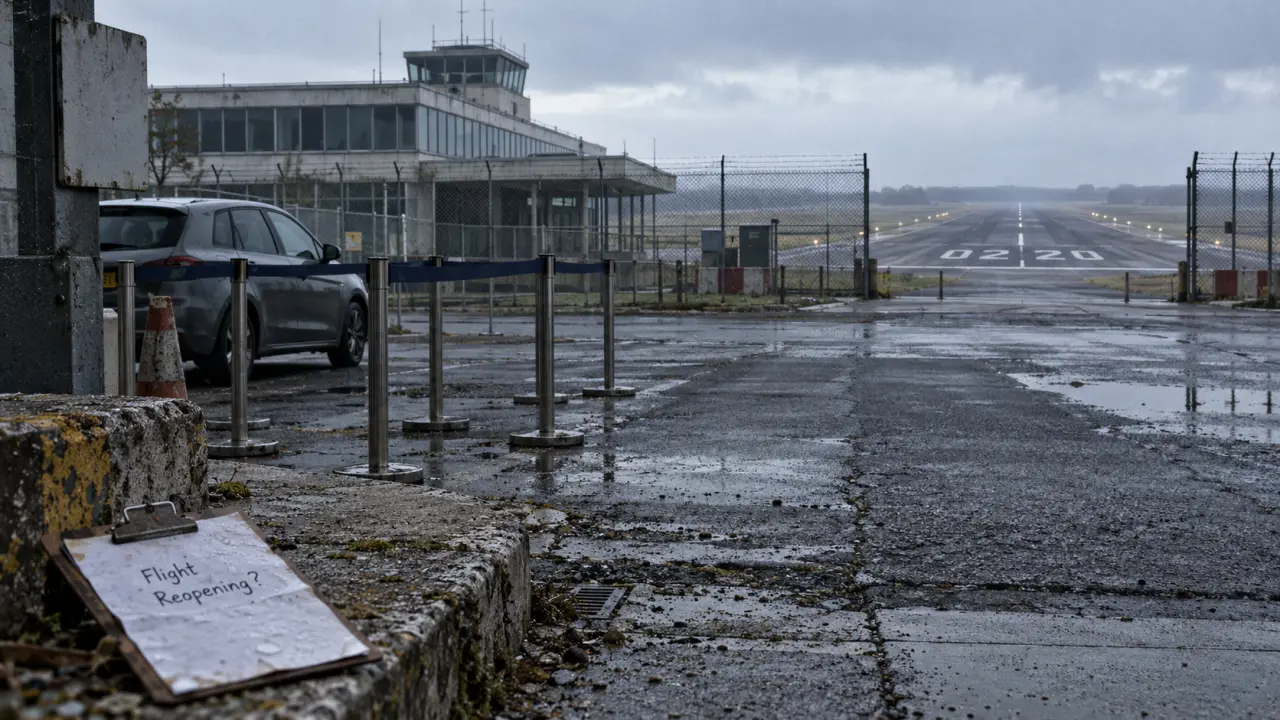
Doncaster Sheffield Airport’s passenger services ended in November 2022. Its future involves more than bringing aircraft back to the runway: reopening depends on operational readiness, commercial agreements and funding. For Sheffield travellers, the crucial distinction is between activity at the airport site and the return of flights that passengers can actually book.
Doncaster Sheffield Airport UK: location and former names
The airport is at Finningley, near Doncaster, rather than in Sheffield. Its historical profile places it approximately 6 miles (10 kilometres) from Doncaster city centre and 19 miles (31 kilometres) from Sheffield. Those figures describe its location, not a guaranteed road distance or journey time.
Doncaster Sheffield Airport and Robin Hood Airport refer to the same airport. The site developed from RAF Finningley, opened for passenger operations on 28 April 2005 and adopted the Doncaster Sheffield Airport name in 2016, according to the same historical account.
The Sheffield name reflects the airport’s regional role. For anyone planning a journey, however, the practical starting point is Finningley. Searching only for “Sheffield Airport” can obscure that distinction and lead to assumptions about how close the terminal is to the city.
Passenger closure and aircraft activity are different things
The airport’s recorded history distinguishes the final TUI Airways passenger services on 4 November 2022 from the closure date of 30 November 2022. Airline withdrawals and uncertainty over commercial agreements formed part of the background to the loss of passenger operations.
A subsequent aircraft landing does not establish that scheduled passenger services have resumed. Cargo, utility and other aviation activity must be distinguished from a functioning passenger timetable. Nor does an announcement about a potential operator establish that an airline has committed to selling seats.
The useful test for travellers is specific: is there a named airline, a published route, an operating date and a bookable service? Historic destination lists, photographs of aircraft and reopening ambitions cannot answer those questions on their own.
Reopening dates should therefore be treated as proposals unless supported by an explicit operational announcement. There is no single confirmed passenger restart date established here that readers should use to organise a holiday or onward connection.
What has to align before reopening
BBC reporting on the reopening process identifies airspace arrangements, lease negotiations, funding dependency and prospective cargo activity as important issues. These are separate strands of the project, not interchangeable signs that passenger flights are ready to return.
- Site and finance: lease arrangements and funding must support a workable operating plan.
- Operational readiness: infrastructure, security, rescue and firefighting provision, and air traffic control require attention.
- Airspace: the relevant arrangements and decision-making process must be addressed.
- Commercial commitments: passenger airlines or cargo operators need agreements that translate ambition into services.
Think of reopening as alignment along several axes: legal control of the site, operational permission and commercial demand. Progress on one axis does not automatically move the others. A lease can secure access without securing passengers; a serviceable runway can accommodate an aircraft without supporting a departure programme. This is a more useful way to judge progress than counting announcements.
For the next update, look for the precise milestone being announced. A consultation response, funding decision or operator negotiation may matter, but each answers a different question about readiness.
The runway, terminal and former route network
The airport’s infrastructure and traffic history records a single runway designated 02/20. Its former terminal provision included 24 check-in desks, six departure gates and three baggage carousels. These describe the airport’s established infrastructure, not confirmation that those facilities are currently available to travellers.
Former airlines included TUI Airways, Wizz Air and Flybe. The route network combined European connections with leisure destinations. In 2019, the airport handled 1,407,862 passengers and 23,043 aircraft movements, according to the historical statistics.
That year’s route figures included 96,612 passengers for Bucharest, 82,279 for Katowice and 68,583 for Alicante. They demonstrate the breadth of the former network, but they are not a prospective timetable. Previous airline participation should never be read as a commitment to return.
What Sheffield residents should watch next
The South Yorkshire Mayoral Combined Authority’s airport material presents reopening as a question of regional investment, employment and connectivity. That is the civic case for the project; it should be considered separately from confirmation of individual flights or a passenger opening date.
For residents, the important questions are whether public investment has clear conditions, whether operating arrangements are sustainable and whether promised connections become actual services. For travellers, the priorities are narrower: confirmed flights, terminal access and reliable onward transport.
Before paying for parking, transfers or accommodation, check that the service being discussed is a passenger flight rather than cargo or other aviation activity. Historical airport information remains useful for understanding the site. It is not a substitute for current booking and access arrangements.